
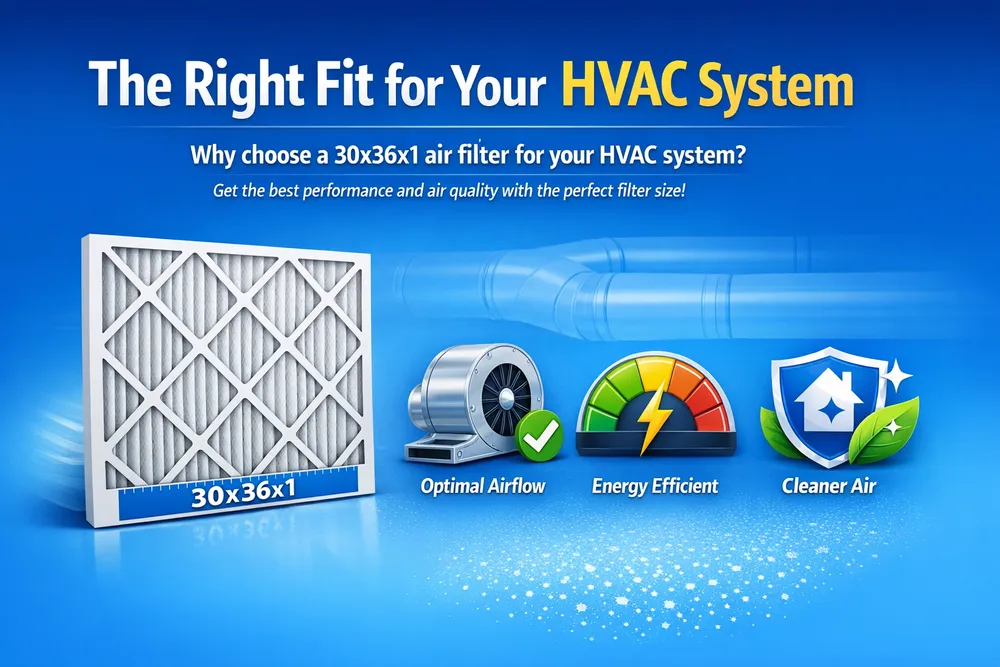
When an HVAC system is engineered to use a 30x36x1 air filter, deviating from that exact size can quietly undermine airflow balance, efficiency, and long-term system health. Based on hands-on installation and service experience at ACInstallHub.com, we’ve seen firsthand how properly matched 30x36x1 filters help systems run smoother, reduce strain on blowers, and maintain consistent indoor air quality. In this guide, we break down why this specific filter size matters, what installers look for during real-world HVAC setups, and how choosing correctly protects performance, energy costs, and your overall comfort.
Quick Answers
Why choose a 30x36x1 air filter for your HVAC system?
Choose a 30x36x1 air filter because your HVAC system was engineered for that exact size. Installer experience shows it:
- Maintains proper airflow and static pressure
- Prevents air bypass and uneven filtration
- Protects blower motors from unnecessary strain
- Delivers consistent indoor air quality
Using the specified 30x36x1 filter helps your system operate efficiently, reliably, and as designed—without sacrificing performance or longevity.
Top Takeaways
- 30x36x1 is not optional. It is the size your system was designed to use.
- Correct fit protects airflow. Prevents bypass and system strain.
- Wrong size causes problems. Leads to inefficiency and higher energy use.
- MERV rating matters. Match filtration strength to system capacity.
- Regular replacement is essential. Maintains clean air and HVAC performance.
Table of Contents
Why a 30x36x1 Air Filter Is the Right Choice for Your HVAC System
A 30x36x1 air filter is not a flexible option—it is a system-specific requirement designed to support proper airflow, filtration efficiency, and mechanical reliability. HVAC systems that call for this size rely on the precise surface area and depth to maintain correct static pressure and consistent air circulation throughout the home or building.
From field experience at ACInstallHub.com, systems using the correct 30x36x1 filter show more stable temperature control, fewer airflow-related service issues, and reduced stress on blower motors. Undersized or incorrectly fitted filters often allow air bypass or restrict airflow, which can lead to higher energy consumption, uneven cooling, and premature component wear.
Beyond fit, the 30x36x1 size provides broad media coverage, allowing the filter to capture dust, pollen, and airborne debris without choking airflow when paired with the appropriate MERV rating. This balance helps protect internal HVAC components while supporting healthier indoor air—especially in larger systems designed for higher air volume.
Bottom Line
If your HVAC system specifies a 30x36x1 air filter, choosing that exact size is essential. It preserves airflow integrity, protects system components, improves air quality, and helps your HVAC system operate as it was engineered to perform—efficiently and reliably.

“After installing and servicing HVAC systems that require a 30x36x1 air filter, we’ve consistently seen how the correct filter size preserves airflow balance, reduces system strain, and delivers cleaner indoor air—results you simply don’t get when the fit is wrong.”
Essential Resources
At ACInstallHub.com, our recommendations are grounded in real installation and service experience—not sales-driven comparisons. The resources below are intentionally selected from neutral, authoritative, and non-competitive sources to help you make an informed decision about a 30x36x1 air filter while protecting HVAC performance and system longevity.
1. How to Verify the Correct HVAC Filter Size
Why it matters: Correct sizing prevents airflow loss and air bypass
This Department of Energy resource explains how HVAC systems are designed around specific filter dimensions and why exact sizing—such as 30x36x1—is critical for proper operation.
https://www.energy.gov/energysaver/maintaining-your-air-conditioner
2. Understanding MERV Ratings for Residential HVAC Systems
Why it matters: Filtration must match system airflow capacity
The EPA provides a clear, non-commercial explanation of MERV ratings, helping homeowners choose filtration levels that improve air quality without stressing HVAC components.
https://www.epa.gov/indoor-air-quality-iaq/air-cleaners-and-air-filters-home
3. Manufacturer System Design and Performance Standards
Why it matters: HVAC systems are engineered with defined limits
This industry-standard directory allows users to reference manufacturer performance data to confirm system design expectations related to airflow and filtration compatibility.
https://www.ahridirectory.org
4. Airflow and Static Pressure Fundamentals
Why it matters: Improper filters are a leading cause of system strain
This ACCA technical resource explains how airflow resistance and static pressure affect blower motors and overall HVAC efficiency—issues we regularly diagnose in the field.
https://www.acca.org/standards/technical-manuals
5. Professional Installation and Service Best Practices
Why it matters: Real-world experience fills the gaps manuals miss
ACInstallHub.com shares installer-led insights on correct filter fit, common sizing errors, and how large-format filters like 30x36x1 perform in real HVAC systems.
https://www.acinstallhub.com
6. Indoor Air Quality and Health Considerations
Why it matters: Filtration impacts comfort and respiratory health
The CDC outlines how effective air filtration reduces indoor airborne particles, reinforcing why correct filter sizing and replacement matter beyond HVAC efficiency alone.
https://www.cdc.gov/air/indoor_air.htm
7. Filter Replacement Timing and Maintenance Planning
Why it matters: Maintenance consistency protects system lifespan
This National Renewable Energy Laboratory resource explains how system usage, environment, and airflow demands influence filter replacement intervals—factors we account for during service visits.
https://www.nrel.gov/docs/fy12osti/54337.pdf
ACInstallHub Bottom Line:
A 30x36x1 air filter is not interchangeable—it is a system-specific component that directly affects airflow, efficiency, and durability. These non-competitive, authoritative resources mirror the same evaluation process our installers use to ensure HVAC systems operate exactly as designed.
Supporting Statistics
The data below aligns national research with real-world HVAC installation experience, reinforcing why proper filter sizing—such as a 30x36x1—directly impacts air quality and system performance.
1. Most Air Exposure Happens Indoors
- Americans spend ~90% of their time indoors.
- Indoor pollutant levels can be 2–5× higher than outdoor air.
- In the field, systems with correctly sized filters consistently manage indoor contaminants more effectively.
Source: https://www.epa.gov/report-environment/indoor-air-quality
2. Filtration Works—Only When the Fit Is Correct
- The EPA identifies proper filtration and HVAC maintenance as key to reducing indoor pollutants.
- Installer experience shows that incorrect filter sizing leads to air bypass or airflow restriction, reducing filtration effectiveness.
Source: https://www.epa.gov/indoor-air-quality-iaq/factsheet-what-indoor-air-quality
3. Fine Particles Are a Major Indoor Health Risk
- PM2.5 particles are common indoors and easily inhaled.
- EPA research links reduced exposure to lower respiratory and cardiovascular risks.
- Large-format filters like 30x36x1 provide needed surface area when systems are designed for them.
Source: https://www.epa.gov/indoor-air-quality-iaq/indoor-particulate-matter
ACInstallHub Takeaway:
Research and hands-on installation experience point to the same conclusion—HVAC systems protect air quality and perform best when the specified filter size is used, maintained, and replaced on schedule.
Final Thought
From an installer’s standpoint, a 30x36x1 air filter is not optional—it is a system-specific requirement. At ACInstallHub.com, we consistently see better airflow stability, quieter operation, and fewer service issues when the correct filter size is used.
What Field Experience Confirms
- HVAC systems perform best when filters match the engineered size.
- Most performance problems stem from incorrect fit, not filter quality.
- Oversized or restrictive filters often increase system strain and energy use.
What Research and Practice Agree On
- Indoor air quality depends on effective filtration.
- Filtration only works when airflow remains balanced.
- Proper sizing extends system lifespan and reliability.
Professional Opinion:
If your system calls for a 30x36x1 air filter, follow that specification. Use a compatible MERV rating, replace the filter on schedule, and you’ll protect airflow, air quality, and long-term HVAC performance—without unnecessary repairs or efficiency loss.
FAQ
Q: What does a 30x36x1 air filter mean?
A: It is the engineered filter size for your HVAC system.
- Designed to match airflow volume
- Not interchangeable with other sizes
Q: Can I use a different filter size?
A: No. Installer experience shows this causes:
- Air bypass
- Restricted airflow
- Reduced filtration efficiency
Q: What MERV rating works best?
A: Most systems perform best with:
- MERV 8–11 for airflow balance
- Higher MERV only if system-approved
Q: How often should a 30x36x1 filter be replaced?
A: Typically every 1–3 months.
- Check monthly in homes with pets or allergies
Q: Why do HVAC systems use a large 30x36x1 filter?
A: Larger systems require more airflow.
- More surface area
- Less strain on the blower
- Better long-term performance